
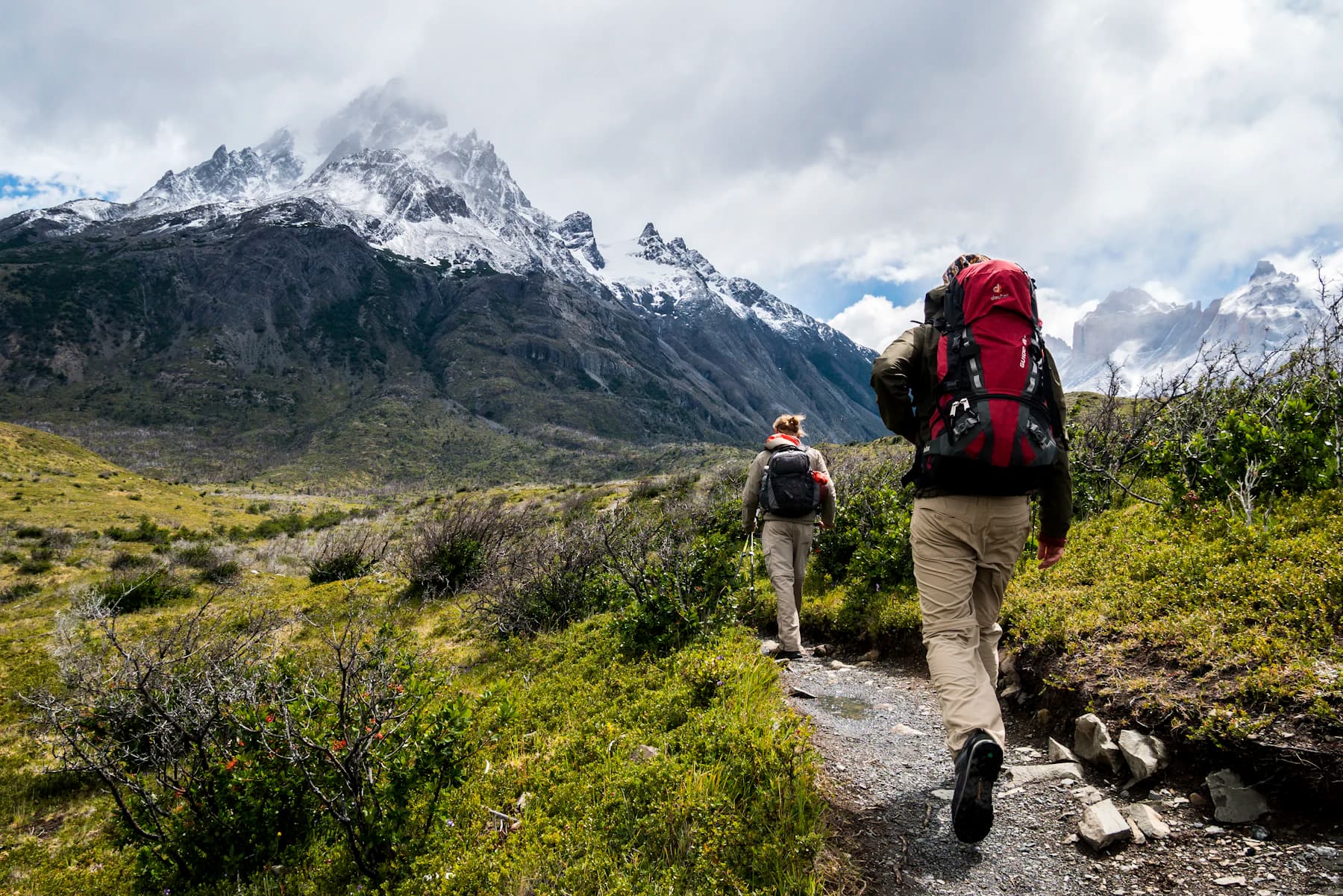
Thirty liters is enough space for a long mountain day, but only if the pack is treated as a working system rather than an empty container. The volume has to cover weather changes, food, water, navigation, first aid, and route-specific equipment while leaving room for the layer that comes off after the first climb. A pack filled tightly at home has no flexibility in the field. A well-planned load starts with the non-negotiable equipment, protects what must stay dry, and keeps the next likely item within reach.
Set the load before choosing the pockets
Lay everything out and group it by function: shelter and emergency, clothing, food, water, navigation, repair, and technical equipment. This makes omissions and unnecessary duplication easier to see. The exact list depends on route, season, remoteness, and group plan, but every item should answer a plausible need. An extra layer for a forecast that cannot occur is not added safety if it displaces water or emergency insulation.
Dense items belong close to the back panel and near the middle of the torso. Water, compact food, hardware, and a small camera are more stable there than at the outer face of the pack. Heavy objects placed high and far back create leverage that pulls on the shoulders; placed too low, they make the load sag and resist hip movement. Soft items can fill the irregular spaces around dense ones and stop them from shifting.
Balance matters across the centerline. If one side pocket carries a full bottle, use the other for similar mass or place the remaining water centrally. A small imbalance is easy to ignore at the trailhead and difficult to ignore after thousands of steps. Once packed, lift the bag by its haul loop and watch whether it rotates. Then wear it, walk up and down stairs, and make one correction before tightening every strap.
Build dry and accessible zones
A waterproof pack liner creates a reliable dry zone even when the pack fabric and zips are weather resistant. Inside it go static insulation, spare base layers, and other items whose performance depends on staying dry. Compress these only as much as needed. Over-compression creates a rigid shape, wastes the small spaces around it, and can make the liner difficult to close.
Outside the liner, reserve quick access for the shell, gloves, warm hat, food for the next two hours, navigation tools, and a small first-aid response. These are not necessarily all in outside pockets. The top of the main compartment can be more secure, provided it can be reached without extracting the dry bag. Pack covers can reduce wetting but do not replace a liner; wind can dislodge them, and water still reaches the back panel and harness.
Use pockets according to risk. Hipbelt pockets suit food, sunscreen, or a compact compass, not essential items that can be lost when a zip is left open. Stretch pockets are good for a damp shell or soft flask but vulnerable to rock and brush. The lid or top pocket can hold small, frequently used objects, though it becomes cluttered if every member of the group contributes something. Tethers are appropriate for a key or small tool, but long cords create their own snag hazard.
Keep the map or primary navigation device available without exposing the dry compartment.
Separate fuel, liquid treatment, and anything that could leak from food and insulation.
Carry first-aid supplies in a recognizable package, not distributed among unrelated pockets.
Leave one expandable area free for a wet layer, found litter, or shared equipment.
Plan water and food as a changing load
Water is often the heaviest part of a day pack and the first mass to change. Start with the route's reliable sources, treatment method, temperature, and distance between refills. Do not reduce water on the assumption that a mapped stream will be running unless current conditions support it. Where refills are dependable, carrying less and treating more often can improve movement; where sources are seasonal or exposed, capacity matters more than minimal weight.
Place the first water where it can be consumed without a long stop. Bottles make remaining volume visible and are easy to refill. A reservoir can support frequent drinking but hides quantity and is harder to inspect for leaks. Either works if the system is checked before departure. Route the hose so it does not pull loose when the pack is removed, and keep bottle openings away from dust and chemical residue.
Food should match the duration plus a reasonable delay, not an aspirational schedule. Pack some food that can be eaten in poor weather without preparation and one reserve portion that remains untouched until the return margin is clear. Distribute it by time rather than type: early, middle, late, and reserve. This avoids opening several bags at every stop and gives an immediate picture of whether consumption is keeping pace with the day.
Field note
Before leaving, confirm that the packed bag has genuine spare space and that critical items can be named and reached by another person. After the day, record what was used, what stayed untouched, and what was difficult to access. Untouched emergency equipment may still be necessary; untouched convenience items deserve more scrutiny. Repack only after drying the liner, clearing food, checking pocket seams, and returning the load to its stable zones. Thirty liters works best when capacity is held in reserve for changing conditions, not consumed by uncertainty at home.